
Open architecture, platform agnostic, passive RF expertise
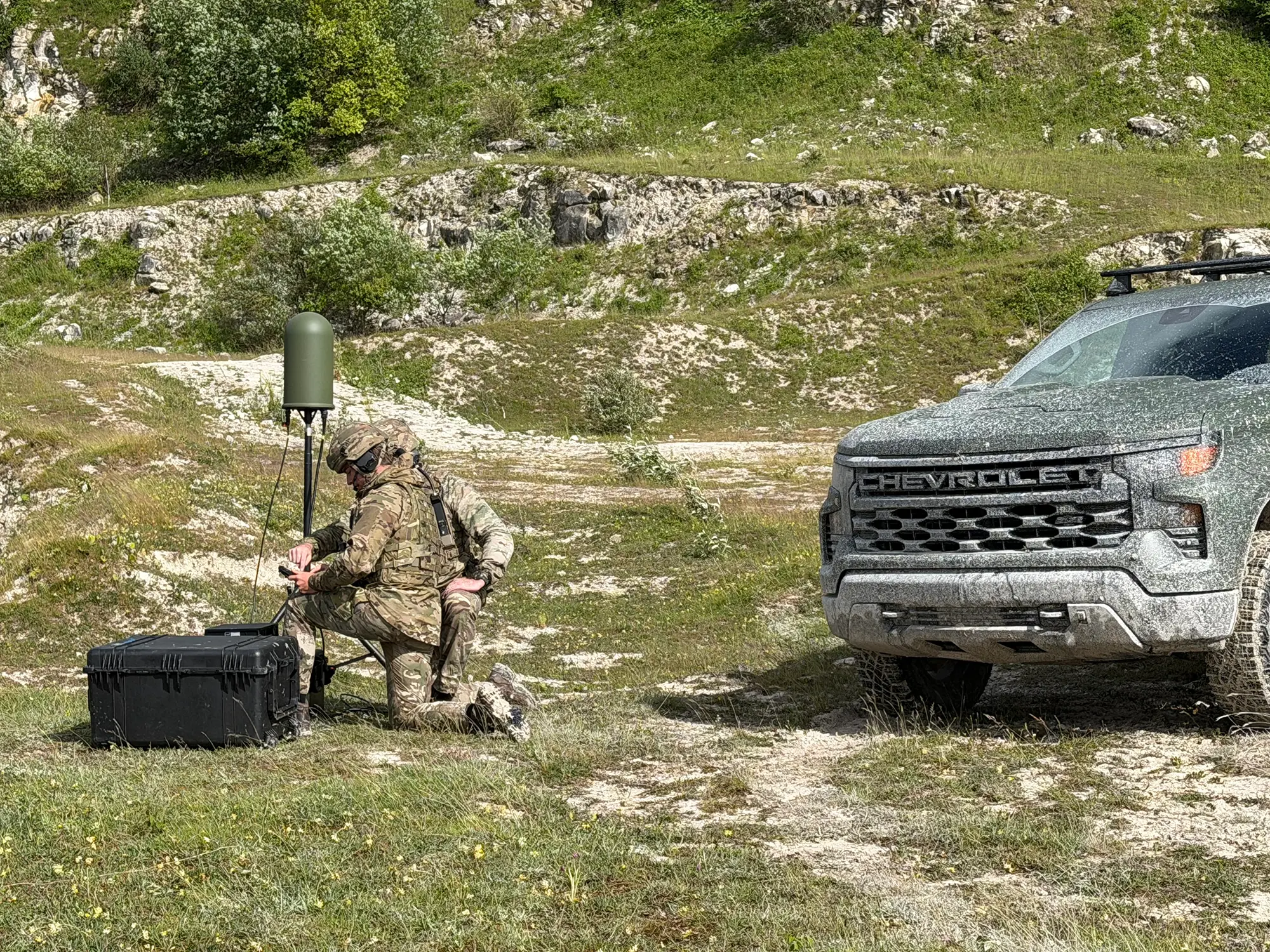
How SKYPERION enables the next generation of layered Counter-Uncrewed Air Systems (C-UAS)
A threat environment evolving faster than any single sensor
The pace of innovation in uncrewed systems is redefining the C-UAS challenge. The threat set now extends far beyond commercially available quadcopters to encompass purpose-built military UAS, first-person-view (FPV) attack platforms, autonomous systems capable of waypoint navigation with minimal or intermittent RF emissions, coordinated multi-axis swarms, and datalinks engineered to evade detection – frequency-agile, low-probability-of-intercept/low-probability-of-detection (LPI/LPD) waveforms, bespoke protocols and, at the extreme, fibre-optic guidance that removes the RF command link altogether.
Each of these developments stresses a different part of the detect–track–identify–defeat chain. Small, low-flying platforms present a minimal radar cross-section against ground clutter; electro-optical and infrared sensors are constrained by weather, range and field of view; RF-based techniques are challenged by emission-control tactics and fibre-optic guidance. For defence procurement organisations, system integrators and prime contractors the implication is clear: no single sensor or effector delivers comprehensive protection. Credible C-UAS capability must be built on an open, layered architecture in which complementary sensing modalities cover one another’s physical limitations and feed a common, fused air picture.
Why passive RF is a foundational layer
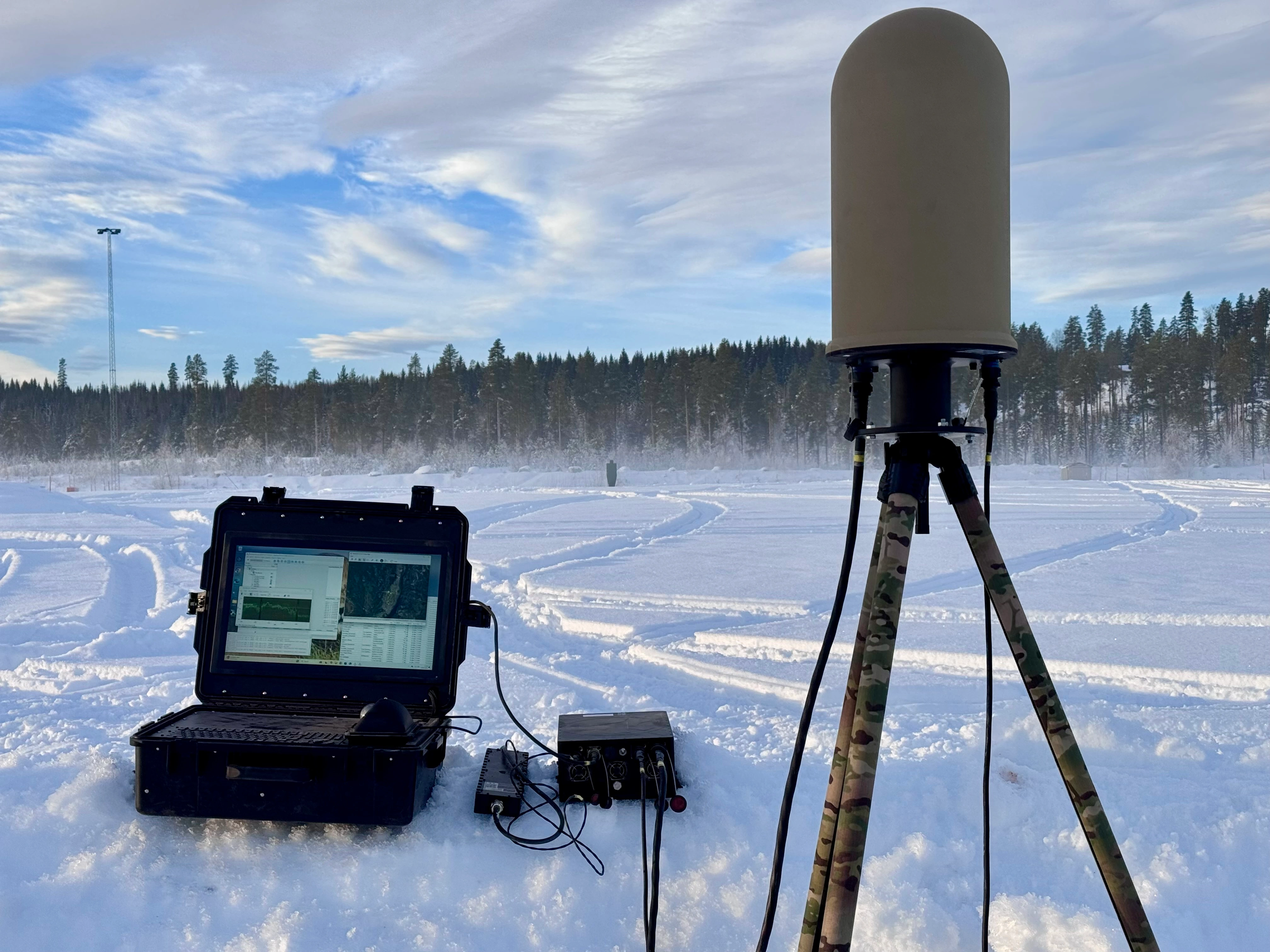
Passive radio frequency (RF) sensing has become a critical component of that architecture. Most uncrewed aircraft depend on RF links for command and control, telemetry and video downlink. Passive RF systems survey the spectrum, detect these emissions and classify them against continuously updated signature libraries – discriminating UAS traffic from the congested background of Wi-Fi, cellular and other emitters, and in many cases identifying the specific platform or protocol family in use.
Because it is entirely receive-only, passive RF offers characteristics no active sensor can replicate. It is covert, emitting no signature that an adversary can detect, target or exploit; it requires no spectrum licensing or deconfliction, simplifying deployment in urban, civil-aviation and expeditionary environments; and it provides persistent, wide-area, 360-degree surveillance at low size, weight and power. Critically, passive RF can detect a threat the moment its control link becomes active, frequently before the aircraft is airborne or within the detection envelope of radar and can locate not only the air vehicle but also its ground control station, enabling action against the operator rather than just the platform. Direction-finding and multi-sensor geolocation techniques allow networked passive RF nodes to generate actionable position data and cue narrow-field sensors such as EO/IR and RF effectors onto the threat.
Passive RF is not a silver bullet; no stand-alone sensor is. RF-silent, fibre-optic-guided or fully autonomous platforms are precisely why passive RF must sit alongside radar, EO/IR and acoustic layers rather than replace them. Within a fused architecture, however, it delivers early warning, emitter-level classification and operator geolocation that no other layer provides.
Metis Aerospace: a specialist, not a closed stack
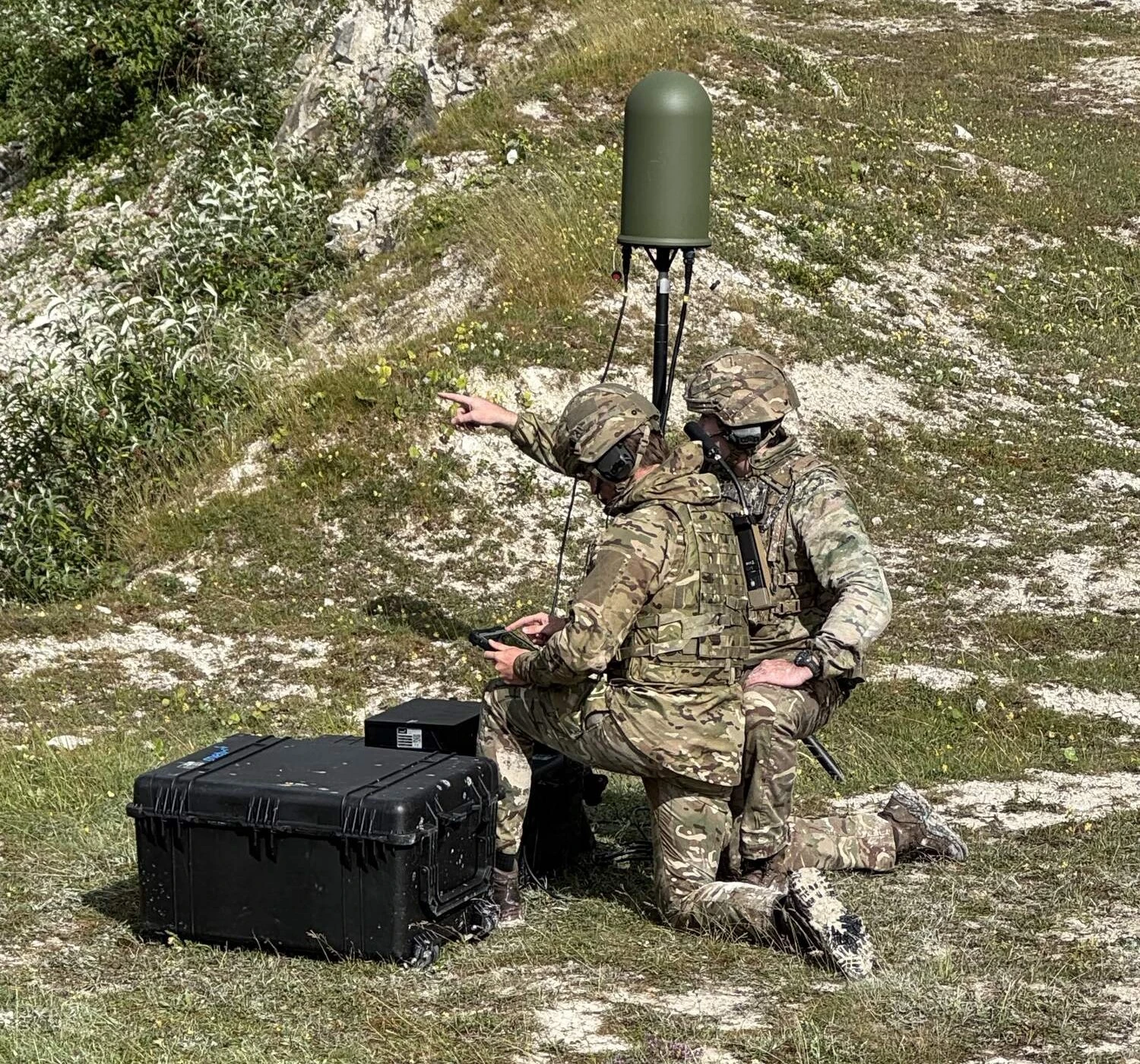
Metis Aerospace is a specialist in passive RF sensing, developing capability designed from the outset to integrate into multi-sensor C-UAS solutions. Rather than delivering closed, proprietary end-to-end systems, Metis provides high-performance RF detection, classification and geolocation as a best-of-breed component that strengthens wider defence architectures.
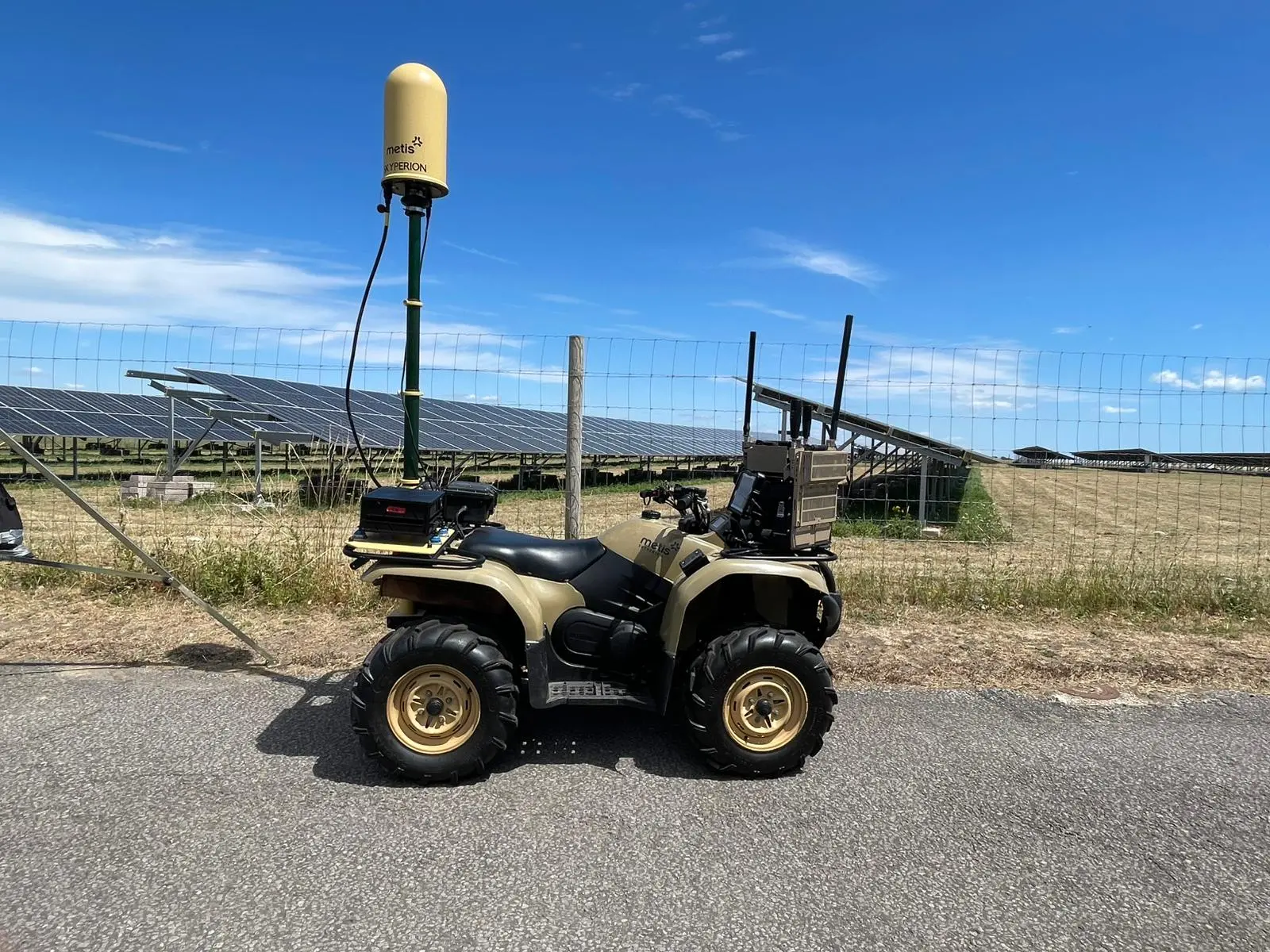
Its SKYPERION passive RF detection capability is operationally proven as part of the UK Ministry of Defence’s ORCUS C-UAS system, has been selected for integration into Leonardo’s Falcon Shield, and is planned for integration within Kongsberg’s recently announced C-UAS solution for Poland in partnership with PGZ and APS. These programmes demonstrate both the maturity of the technology and its ability to integrate into complex, mission-critical, multi-vendor defence systems under real operational conditions.
Open architecture by design
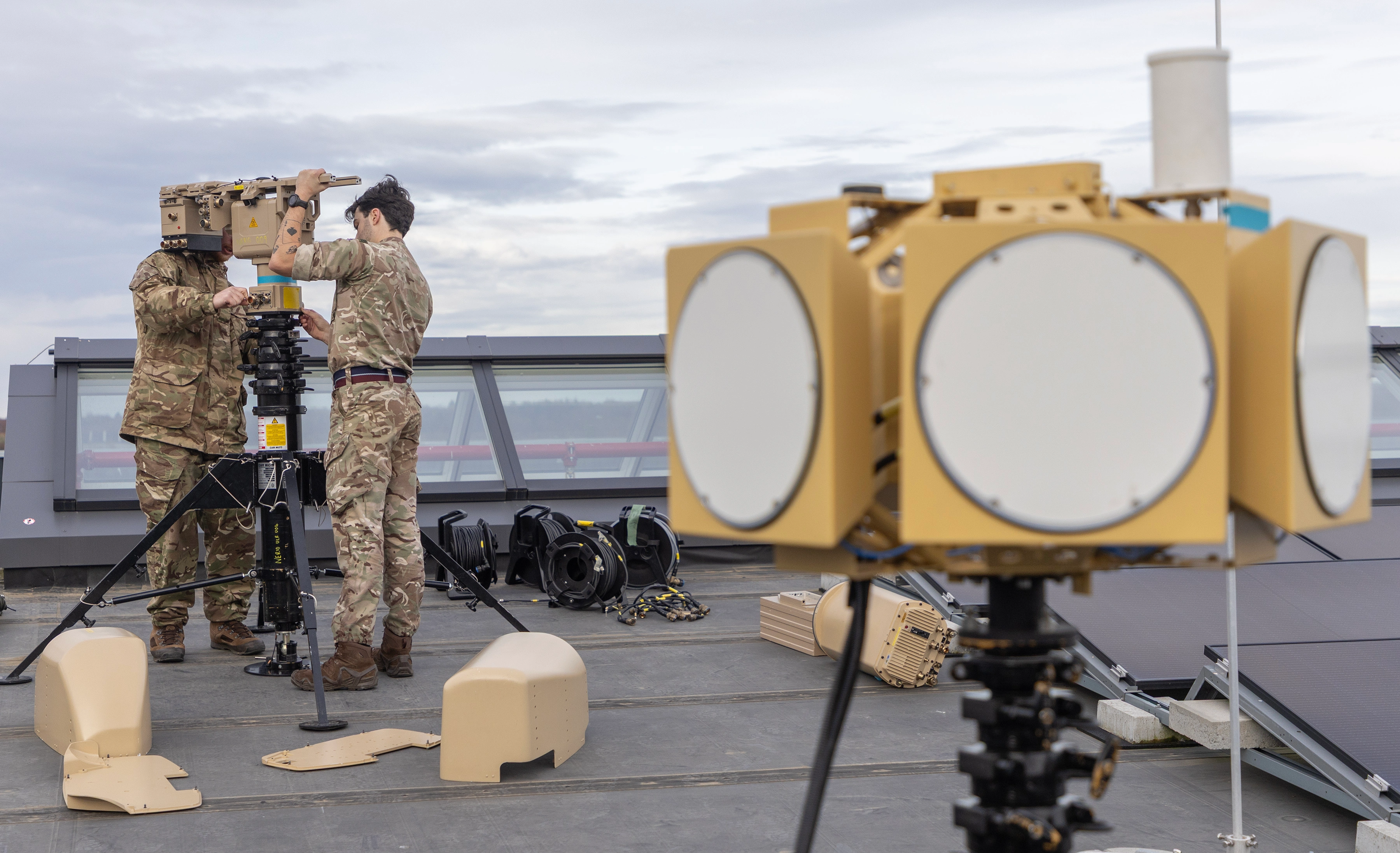
SKYPERION is designed with interoperability at its core: it is OEM and prime-agnostic, with a modular hardware and software architecture and standards-based integration interfaces aligned with open C-UAS interoperability initiatives such as SAPIENT. Detections, classifications and geolocation tracks are published in machine-readable form for consumption by third-party command-and-control and sensor-fusion layers, enabling rapid integration into existing and future C-UAS programmes without disrupting established C2 architectures or sensor ecosystems.
For defence customers this modular, open-systems approach delivers concrete advantages: freedom from vendor lock-in; incremental capability insertion as threats and technologies evolve; and spiral upgrades such as refreshed emitter libraries responding to new commercial and improvised platforms, without redesign of the wider system. Whether deployed as a standalone passive RF sensor or as one layer of a comprehensive integrated solution, SKYPERION contributes enhanced situational awareness, earlier and higher-confidence threat detection, and the emitter-level intelligence needed to support more informed engagement decisions.
Integration is the deciding factor
As C-UAS requirements continue to evolve, success will increasingly depend on the ability to integrate specialist technologies into coherent, scalable and adaptable defence systems and to do so quickly. Metis combines deep passive RF domain expertise with a proven track record of integration into national and prime-led programmes, enabling defence organisations, prime contractors and system integrators to field more capable, resilient and future-ready counter-UAS solutions.

Receive automatic, real time updates
Sign up with your email address to receive the latest news and information from our team.

Where To Find Us
Unit C
Westminster Industrial Estate
Station Road
Lincoln
LN6 3QY
United Kingdom
Expertise
What We Do
Follow us
